Ask ten developers what “AI in games” means and you will hear ten different answers. Some mean the enemies that chase you down a corridor. Some mean tools that generate terrain, textures or test builds. Others mean the newest wave of generative models. All of them are real, and they change different parts of the job.
This article separates those threads. It looks at where AI has always lived inside games, where newer techniques are changing the way games are built, and what that means for someone learning to make them today.
Two meanings of AI in games
Inside a game, “AI” has long meant the logic that controls non-player characters (NPCs): how a guard decides to patrol, how a driver in a racing game picks a line, how a shopkeeper responds when you walk in. This kind of AI is hand-designed. A programmer or designer writes the rules, and the character follows them.
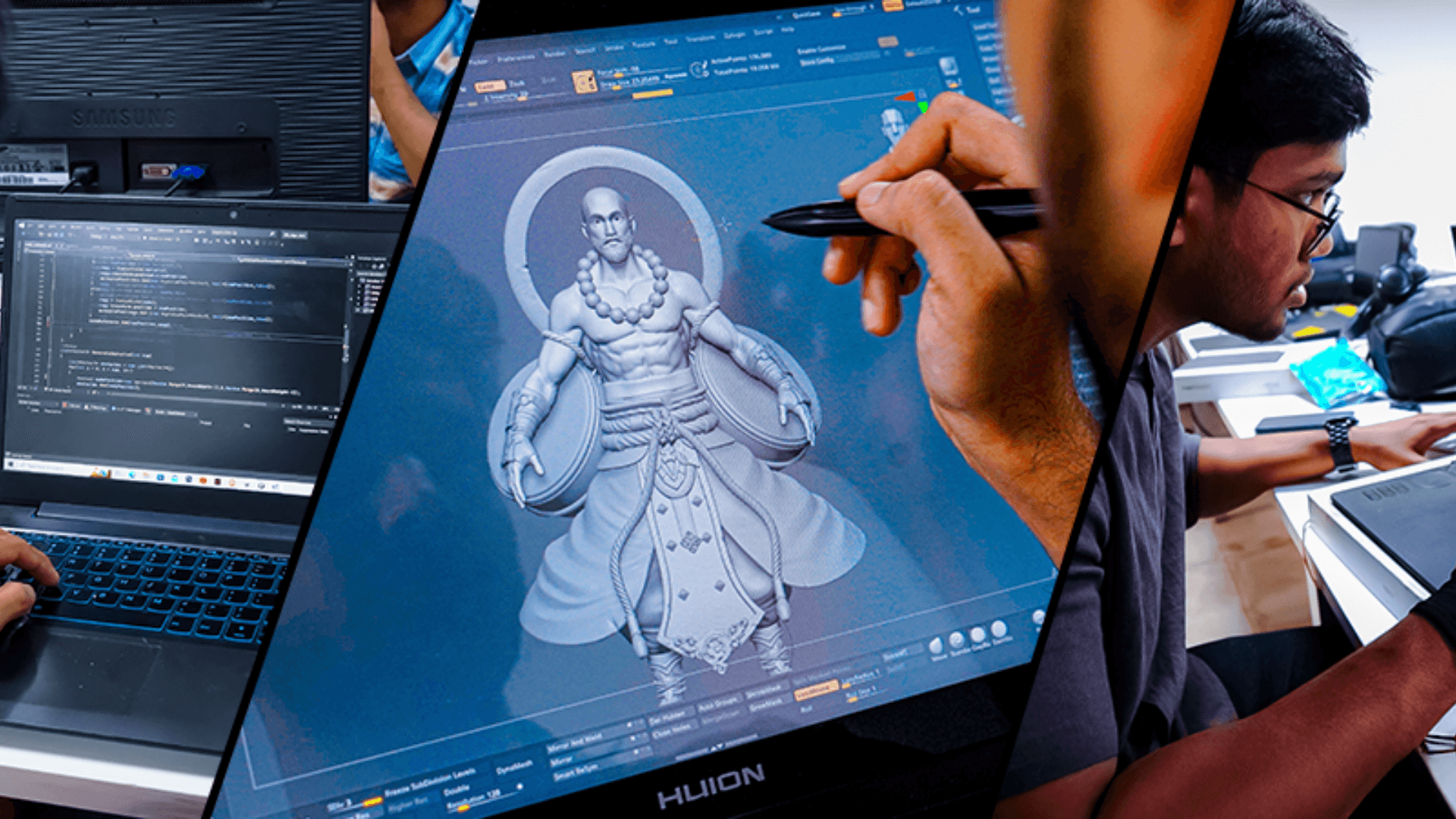
Around a game, AI increasingly means tools used by the people making it: systems that suggest code, generate variations of an asset, clean up animation data or play a build thousands of times to find problems. The player never sees these tools, but they change how quickly a team can try things.
| Compare | AI inside the game | AI around the game |
|---|---|---|
| Who uses it | The player meets it as characters and systems | The development team uses it while building |
| Typical examples | State machines, behaviour trees, pathfinding, procedural generation | Code assistants, asset variation, automated playtesting, animation clean-up |
| Who controls it | Designers and programmers write the rules | Developers direct it and review the output |
Worlds that build themselves
Procedural generation lets a game create terrain, levels, items or quests from rules rather than placing every element by hand. The designer defines the constraints, such as how steep a hill can be, how far apart towns sit and which rooms may connect, and the system explores what is possible inside them.
This is why a small team can ship a game with far more variety than they could ever place manually. It is also why procedural content can feel bland when it is done carelessly. Rules that are too loose produce noise. Rules that are too tight produce the same level again and again.
The craft has not disappeared. It has moved from placing objects to designing the rules that place them, and then judging whether the output is any good.
Characters that seem to think
For decades, NPC behaviour has been built from a small set of dependable ideas. A state machine moves a character between clear states such as idle, alert, chase and attack. A behaviour tree organises decisions into branches the character checks in order. Pathfinding works out how to get from one place to another without walking through walls.
Newer approaches add flexibility on top: characters that adapt to what the player has done, dialogue that varies rather than repeating one line, or systems that learn a good route from experience. These are powerful, but they also make behaviour harder to predict, and unpredictable characters are hard to balance.
Faster pipelines behind the scenes
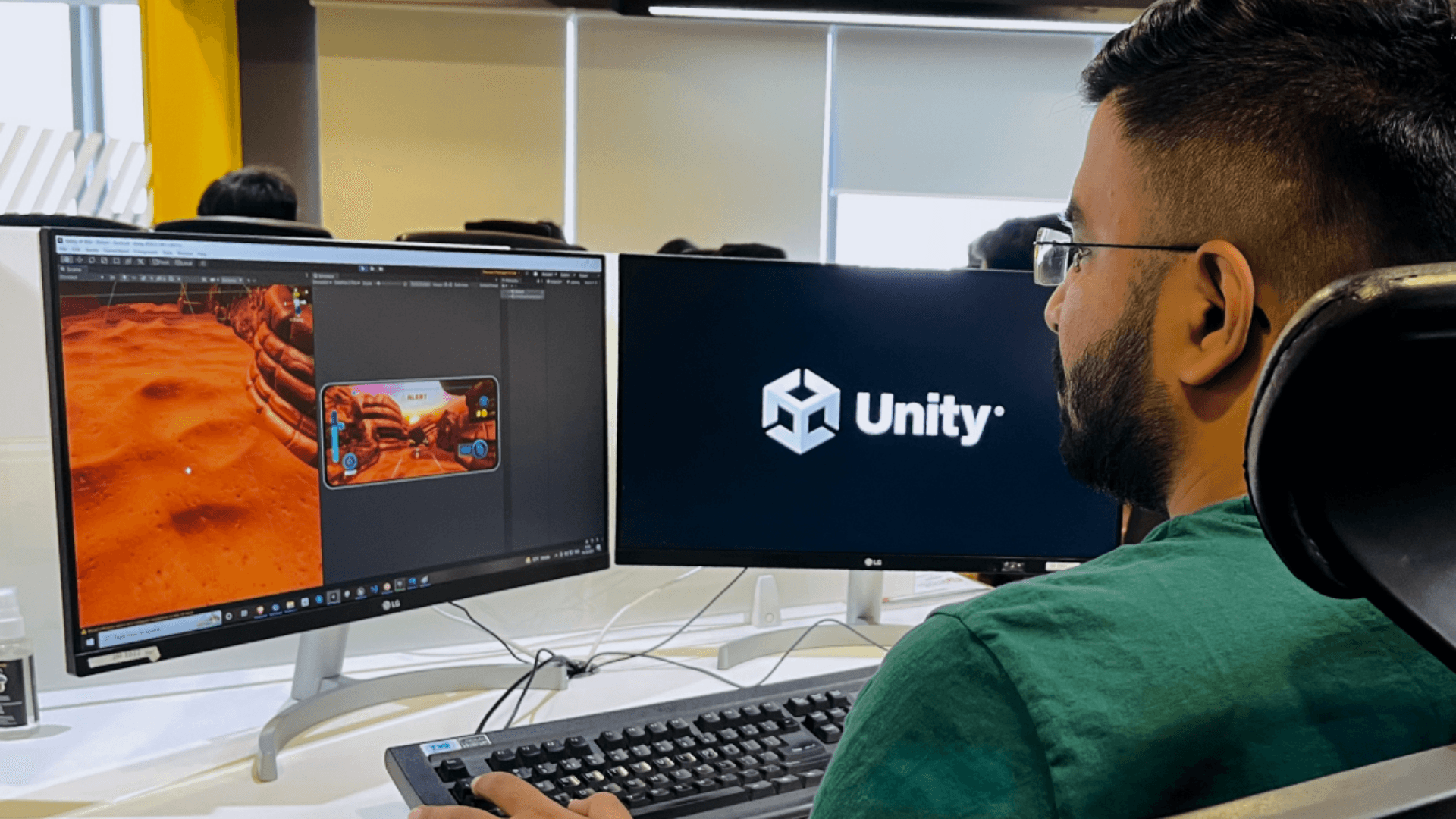
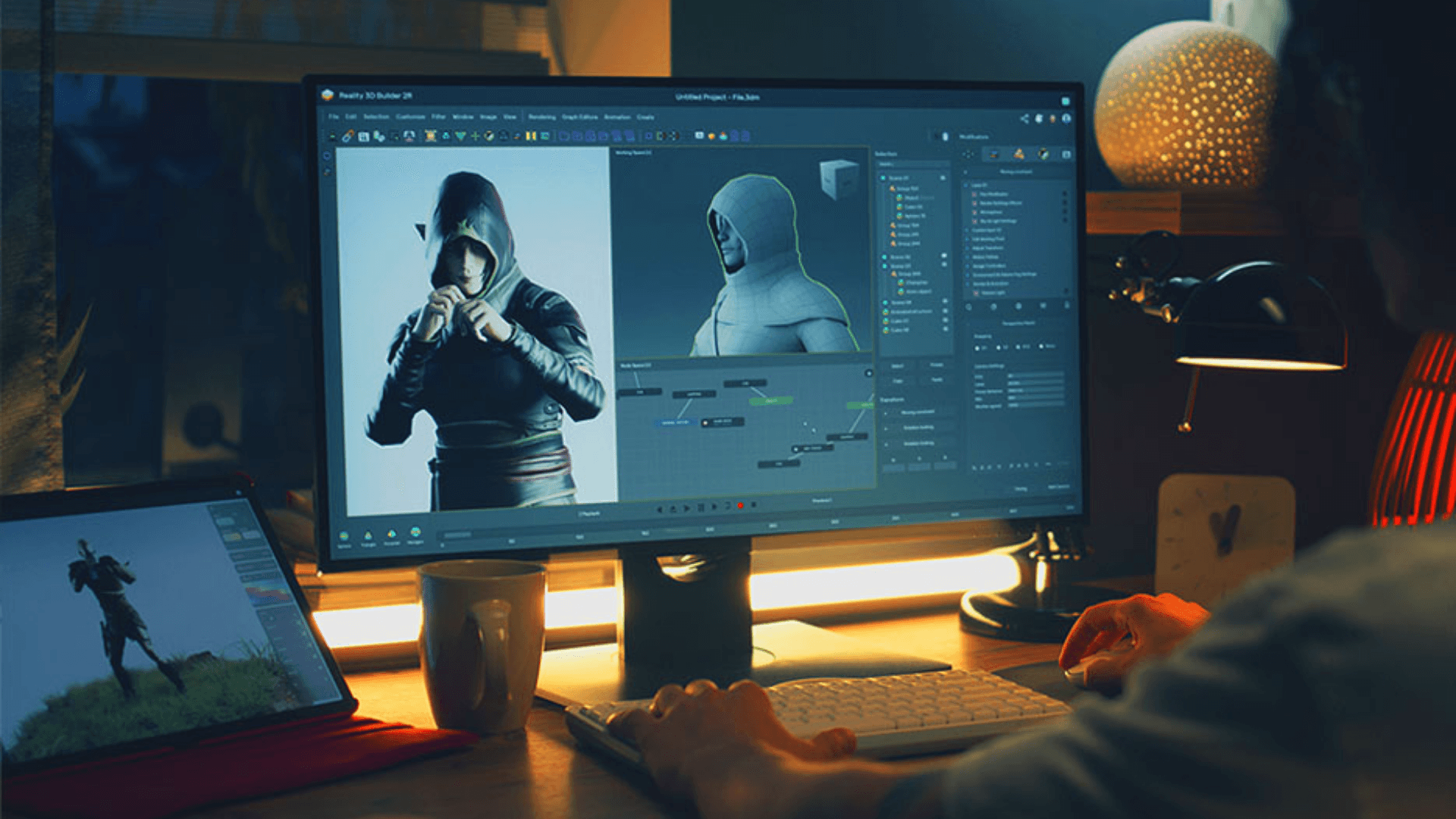
On the production side, AI-assisted tools are being used for prototyping, generating variations of art, tidying motion capture data, suggesting code and running automated tests that play through levels to look for crashes or places where players get stuck.
- Prototyping: getting a rough idea playable sooner, so it can be judged before real effort is spent.
- Asset variation: producing alternatives of a prop or texture that an artist then chooses from and refines.
- Animation clean-up: removing noise from captured movement so animators can focus on performance.
- Automated testing: bots that run a build repeatedly and report where it breaks.
Each of these shortens repetitive work. None of them decides what the game should be. That still takes a person who understands players.
What this means if you want to make games
It is tempting to treat these tools as a shortcut around learning. That tends to backfire. Reviewing what an assistant produces requires the skills it appears to replace: you need to recognise a bug, a clumsy mechanic or an asset that does not fit the art direction.
A good exercise is to build a small enemy by hand with a state machine, then experiment with a more advanced approach and compare them. You will learn what each method is actually good for. If you want a deeper look at the design side of that question, read what a game designer actually does.
Questions worth asking
- Does this technique make the game more fun, or only cheaper to make?
- Can I explain and adjust the behaviour it produces?
- Who owns the result, and does it fit the style of the rest of the project?
Asking them early is part of working like a professional, whatever tools are in the pipeline.
Both the AI inside a game and the AI tools around development are covered in our Game Development course in Nashik, alongside the fundamentals they build on.